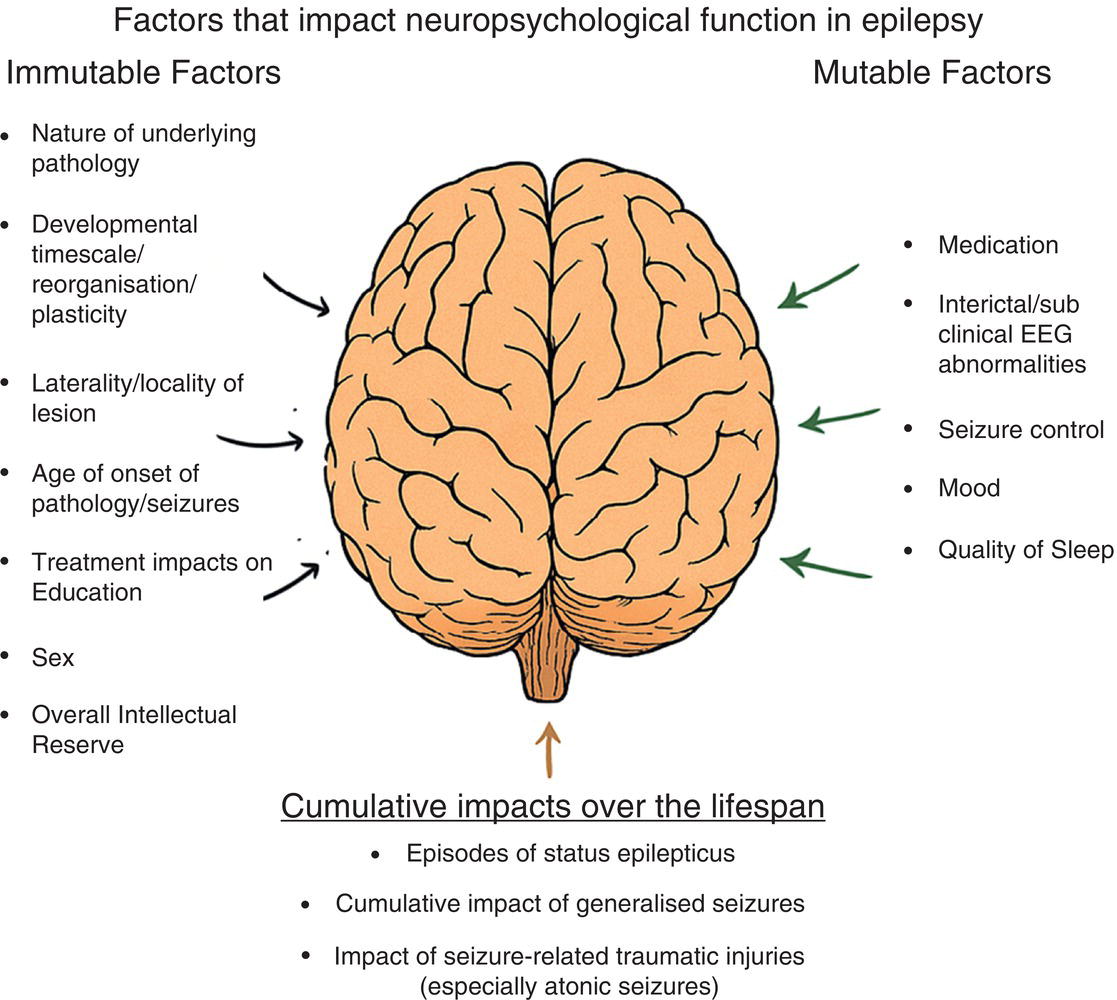
Sallie Baxendale The occurrence of unprovoked seizures defines epilepsy, but epilepsy extends far beyond this hallmark symptom. The International League Against Epilepsy (ILAE) has emphasised that epilepsy is a brain network disorder. Since the brain is the organ of cognition and behaviour, seizures are often accompanied by significant cognitive, emotional, and behavioural symptoms.1 Often labelled ‘comorbidities,’ these difficulties are often different symptoms of the same underlying pathology that results in seizures. The term “essential comorbidity” has been used to emphasise this distinction. For some people, these difficulties can be as debilitating as the seizures themselves, affecting quality of life, daily activities and social function.2 The neuropsychological manifestations of the underlying network disorder may shape the life trajectory of a person with epilepsy as profoundly as does seizure control. With the increasing understanding of the implications of epilepsy as a network disorder, the role of neuropsychology in epilepsy management has grown significantly. Initially used to identify signs of localised dysfunction, neuropsychological assessment is now a cornerstone of holistic care, offering insights into cognitive deficits, the effects of medical treatment, and surgical outcomes. With advances in medical treatments and surgical techniques, neuropsychological input remains essential, not just for monitoring the impacts of these treatments and surgical planning. Neuropsychological input also helps people with epilepsy manage the everyday cognitive and emotional challenges associated with the condition. The severity and profile of epilepsy neuropsychological impairments in those with epilepsy vary significantly among individuals and are shaped by an array of biological, psychological and social factors. A useful clinical framework categorises these influences into immutable and mutable factors, as well as those that change across the lifespan and the course of the condition (Figure 9.1).3 Immutable factors are intrinsic to the individual and are typically stable over time, although their impact on cognitive function may vary across the lifespan. The most prominent fixed influence is the underlying pathology that gives rise to recurrent seizures. Structural brain abnormalities often disrupt neural networks involved in cognition. Their location is a crucial consideration in shaping the associated neuropsychological deficits. The impact of a lesion is also determined by the neurodevelopmental context in which it occurs. A left temporal lobe lesion present from birth (e.g. focal cortical dysplasia) will have an impact on the way cognitive functions develop, often resulting in abnormally networked functions from the outset. Atypical cognitive organisation may also impact upon neuropsychological functions in more remote networks, for instance, reversed language dominance or distributed networks resulting from an early insult. In contrast, a lesion that develops in the same location but later in life, in a normally developed brain, will have a different impact on cognitive function, affecting normally developed networks. FIGURE 9.1 Factors that impact neuropsychological function in epilepsy. Another fixed factor is the age at which the seizure onset occurs. An early onset of seizures, in infancy or childhood, may interfere with brain maturation and result in persistent deficits across multiple domains, including attention, executive function, and language. Neurodevelopmental delay or global cognitive impairment is often evident in children with early and complex epilepsies. In such individuals, neuropsychological profiles may appear uniformly low across domains, not necessarily due to an absence of relative strengths, but because normative tests lack sensitivity at low levels of function. The overall level of intellectual function is also a key determinant in shaping the nature and extent of neuropsychological difficulties associated with an underlying lesion. People with a high cognitive reserve may be able to develop and implement compensatory strategies to minimise the impact of focal impairments on their daily function. However, individuals with lower levels of intellectual ability may be less resilient if seizures develop and experience more significant disruptions in education and daily functioning. Unlike fixed variables that shape the nature and extent of associated neuropsychological impairments, the impact of remediable factors varies and can often be addressed through clinical intervention. Antiseizure medications (ASM) may have a significant impact.4 While many ASM contribute to a mild degree of cognitive slowing, some have distinct side effect profiles, e.g. topiramate and zonisamide are associated with expressive language deficits and executive dysfunction. Levetiracetam has been linked to irritability and mood disturbance, which can indirectly affect concentration and memory.5 Mood disorders such as anxiety and depression are frequent epilepsy comorbidities and are strongly associated with neuropsychological complaints.6 Subjective cognitive symptoms, especially forgetfulness, distractibility and word‐finding difficulties, often correlate more with mood state than with objective performance.7 In consequence, psychological treatment may yield meaningful improvements in cognitive function, in addition to improving mood. Seizures and interictal epileptiform activity can transiently affect cognitive function.8 Other remediable factors include sleep disturbance, stress, medication nonadherence and fatigue. These are common in people with epilepsy and can cause significant day‐to‐day variability in cognitive function, particularly concerning attention, processing speed and working memory. Several factors change over the lifespan or as epilepsy progresses. In childhood, impairments in attention and executive functioning may only become problematic as academic demands increase. In adolescence, challenges with organisation, planning and processing speed may emerge or intensify. Adults with long‐standing epilepsy may show accelerated age‐related declines in cognitive function due to the cumulative effects of seizures or brain injuries sustained during seizures. Stepwise deteriorations following episodes of status epilepticus can also occur. Due to developmental hindrance, some people with epilepsy follow a typical trajectory of age‐related decline but start from a lower baseline, so that functional impairments are evident earlier in life than in healthy peers.9 Seizure control is a dynamic factor that has broad cognitive and psychological effects. Frequent or uncontrolled seizures are associated with greater cognitive disruptions, while seizure freedom often allows for improved neuropsychological stability. Serial neuropsychological assessments can be valuable not only for detecting deterioration but also for identifying windows of opportunity for intervention and support. A neuropsychological assessment is a systematic process used to evaluate an individual’s cognitive, emotional, and behavioural status. In epilepsy, this provides information about the impact of seizures, medications, and underlying brain pathology on cognitive and psychosocial functioning.10 The assessment process integrates data from three key strands: the clinical interview, the psychometric assessment and behavioural observations. The clinical interview is the cornerstone of neuropsychological assessment. Clinicians obtain a detailed history, including the person’s medical, educational, and psychological background. Special attention is given to the nature of the epilepsy, seizure frequency, treatment history and subjective cognitive complaints. The interview often includes family members or carers, whose insights into functional changes can be vital. Listening to subjective memory complaints provides critical clinical insights. Traditionally, subjective memory complaints have been regarded as poorly correlated with objective cognitive deficits. However, recent work has identified distinct ‘signature’ patterns of memory complaints correlating with anxiety and depression.6 Memory lapses involving social situations (e.g. forgetting names or repeating oneself) may signal elevated anxiety levels, while complaints of autobiographical memory loss may be more indicative of depression. Recognising these patterns can inform care direction, such as prioritising mood screening or referral to psychological services, rather than pursuing unnecessary ASM adjustments. In clinical practice, this differentiation is valuable, enabling clinicians to interpret reported memory difficulties more accurately, not necessarily as signs of memory decline, but rather as potential indicators of mood disturbance. A battery of standardised tests is administered to obtain objective measures of performance across multiple cognitive domains. These typically include intellectual functioning, memory (verbal and visual, learning, recall, and recognition), attention and concentration, executive functions (planning and cognitive flexibility), language (receptive and expressive), and visuospatial skills. Performance Validity Tests (PVT) and Symptom Validity Tests (SVT) are increasingly incorporated into the psychometric assessment.11 PVT assess the credibility of a person’s performance, determining whether test results accurately reflect their actual ability. SVT, in contrast, consider the likelihood of accuracy of reported symptoms, such as complaints of memory loss or emotional distress. Both are crucial for ensuring the validity of assessment findings. Without them, clinicians risk misinterpreting results, potentially leading to incorrect formulations, which can impact treatment decisions. Accurate identification of genuine impairment versus exaggerated or feigned issues is critical for effective intervention. Standardised cognitive tests are normed on age‐matched populations and interpreted in the context of estimated premorbid abilities. Profiles of cognitive strengths and weaknesses across multiple domains can be used to lateralise (left vs. right) and localise dysfunction. In practice, however, the underlying causes of any observed impairments are often multifactorial and cumulative.3 During testing, clinicians observe how people approach tasks, their levels of motivation, signs of fatigue, emotional responses, and interactional style. These observations can reveal discrepancies between formal test scores and everyday functioning, and also help determine the aetiology and stability of any cognitive impairment identified through formal testing. The integration of these components leads to a formulation that presents the nature, extent and likely causes of cognitive difficulties. Practical recommendations for management, including psychoeducation, cognitive rehabilitation, and support for vocational and academic choices, result from this formulation. Neuropsychological assessments also provide valuable information for assessing mental capacity. Neuropsychological evaluations contribute to diagnostic precision, inform treatment decisions and contribute to improved outcomes. This bridges the gap between medical diagnosis and real‐life function, providing information that enables management plans to address the full spectrum of an individual’s needs. See Table 9.1 for a summary of the specific roles neuropsychology can play in the management of people with epilepsy.10 Table 9.1 The Role of Neuropsychology in the Assessment and Treatment of People with Epilepsy.
CHAPTER 9
The Role of Neuropsychology in the Management of People with Epilepsy
NEUROPSYCHOLOGICAL DIFFICULTIES: AN ESSENTIAL COMORBIDITY OF EPILEPSY
IMMUTABLE FACTORS
MUTABLE FACTORS
FACTORS THAT VARY ACROSS THE COURSE OF THE DISEASE
THE NEUROPSYCHOLOGICAL ASSESSMENT
CLINICAL INTERVIEW
PSYCHOMETRIC TESTING
BEHAVIOURAL OBSERVATIONS
INTEGRATION AND FORMULATION
ROLE OF NEUROPSYCHOLOGY IN THE ASSESSMENT AND TREATMENT OF PEOPLE WITH EPILEPSY
Related posts:


Stay updated, free articles. Join our Telegram channel

Full access? Get Clinical Tree


